

The Fall Edit: A Well-Dressed Home, Beyond the Season
What fall 2026 fashion can teach us about interiors, and how to bring colour, texture and comfort home without starting again.
A good coat can change the way an entire outfit comes together. It does not require a new wardrobe. We think a seasonal update at home should work much the same way.
Autumn invites a closer look at the rooms we return to every day: the living room after work, the kitchen when friends come over, the bedroom at the end of an evening. As the days become shorter and we naturally spend more time indoors, the way a room feels becomes just as important as how it looks. The question is not simply how to make it look more autumnal, It is how to make it feel more comfortable, more personal and better suited to the way we live.
Sometimes the answer is a different arrangement of furniture, a lamp in the right place or a richer fabric introduced alongside pieces you already love. Sometimes a seasonal refresh reveals something larger: an inefficient layout, unfinished window treatments or a kitchen that never quite works when everyone gathers. The useful starting point is knowing the difference.
Take a cue from fashion, not a prescription
Ralph Lauren’s Fall 2026 collection offers an appealing combination of herringbone tailoring, textured knitwear and leather with a lived-in finish. The interest lies in the relationships between them: structure against softness, a crisp line beside a relaxed surface, familiar materials assembled with a different emphasis.
“I love the adventure of fashion. My Fall 2026 Collection is inspired by that kind of renegade spirit and the confidence of the woman who will wear it in her own personal way—to tell her own story. She respects the timeless quality of things from the past but reinvents them for now. Her style is not defined by time. It’s enduring.”












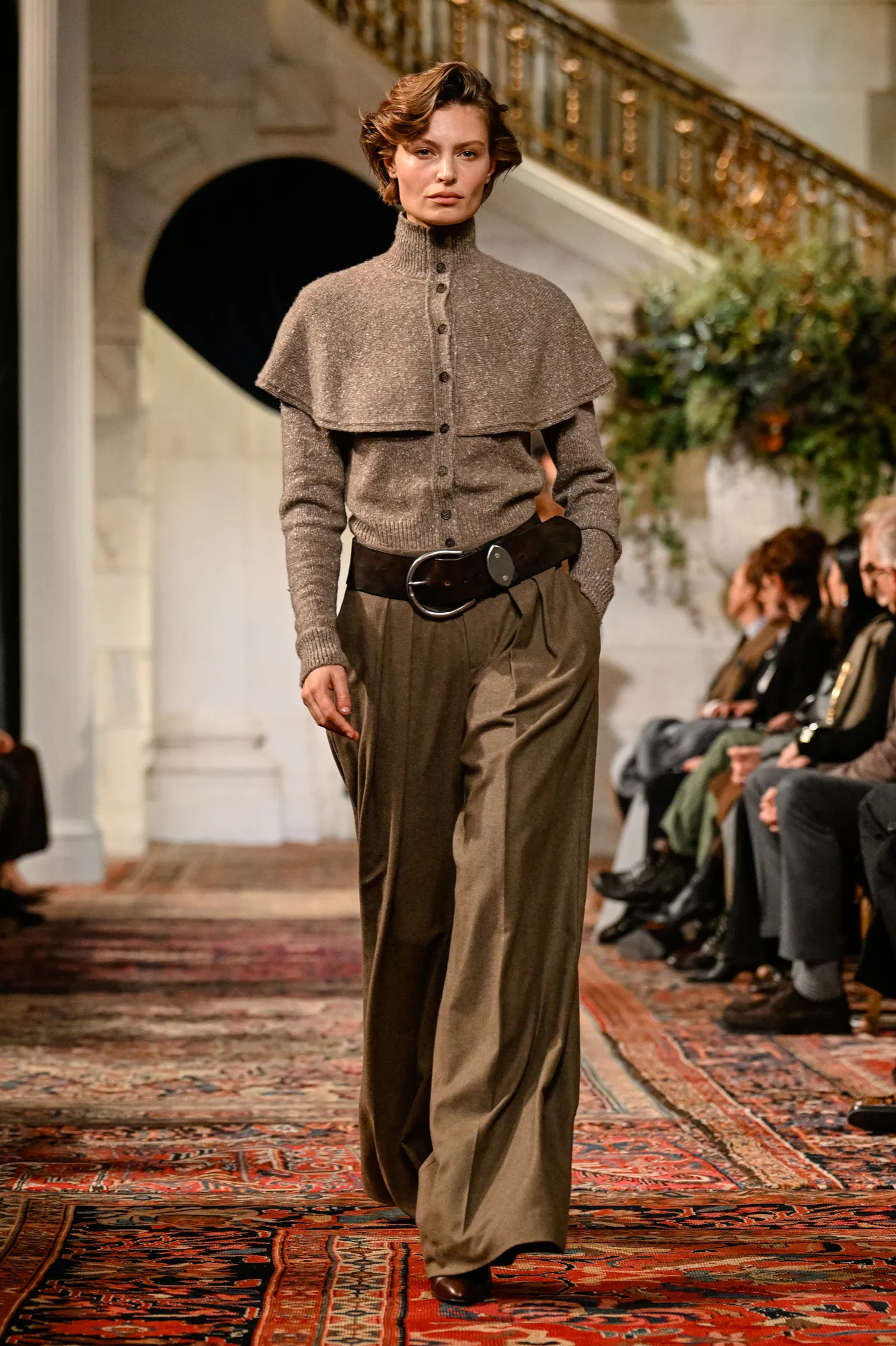


Above: Ralph Lauren Fall 2026 Ready-to-Wear Collection
Image Credit: Giovanni Giannoni/WWD
Our interior interpretation is less about copying a particular look and more about borrowing that approach. A tailored sofa might sit beside a generously upholstered chair, while a polished table can bring definition to a room filled with soft textiles. A restrained palette can become much more expressive when its surfaces vary.
Think of tonal dressing as a way to explore colour. Rather than matching every brown in a room, consider the relationship between pale oatmeal, tobacco, deeper timber and a small amount of wine red. For autumn, chocolate and tobacco can ground a space, while plum, oxblood, olive and rust add dimension without pushing the room into an obvious seasonal palette.
Think of tailoring as a question of fit, and personal style as permission to keep something unexpected. A beautiful chair still needs to suit the scale of the room; drapery should relate to the architecture, not simply introduce another fabric. An inherited table, favourite patterned chair, aged wood piece or vintage vessel can bring more depth than a collection of seasonal accessories. We like the tension between something refined and something with visible age. The aim is not to dress your home as someone else’s, but to compliment your style and to showcase your aesthetic.
Start with the colour that is already there
Before choosing a new palette, look at the finishes that will remain. Flooring, cabinetry, stone, upholstery and neighbouring rooms are all part of the colour conversation. A brown paint sample does not exist independently of the wood floor beneath it. A cream fabric needs to be considered beside the actual wall colour, not only against a photograph on your phone.
Light deserves equal attention. Exposure, surrounding finishes, time of day and even the season can all influence how a paint colour reads. Before committing to a substantial change, review samples in the actual room under both natural and artificial light.
This becomes especially relevant in fall, when the quality and duration of natural light begin to change. A colour that felt airy in summer may read considerably deeper on a grey afternoon in October.
For a seasonal update, we would begin with one of two approaches.
Keep a lighter foundation and deepen the accents. Consider oatmeal upholstery, existing wood tones, a tobacco-coloured textile and a small amount of plum or oxblood. This is an option for someone who enjoys a bright home but wants a little more depth.
Or build a closer tonal palette. Explore related shades across walls, upholstery and drapery, then introduce contrast through texture and a few lighter surfaces. This suits someone who prefers a more enveloping room, provided the lighting and existing finishes support it.
Neither approach requires every room to become dark.
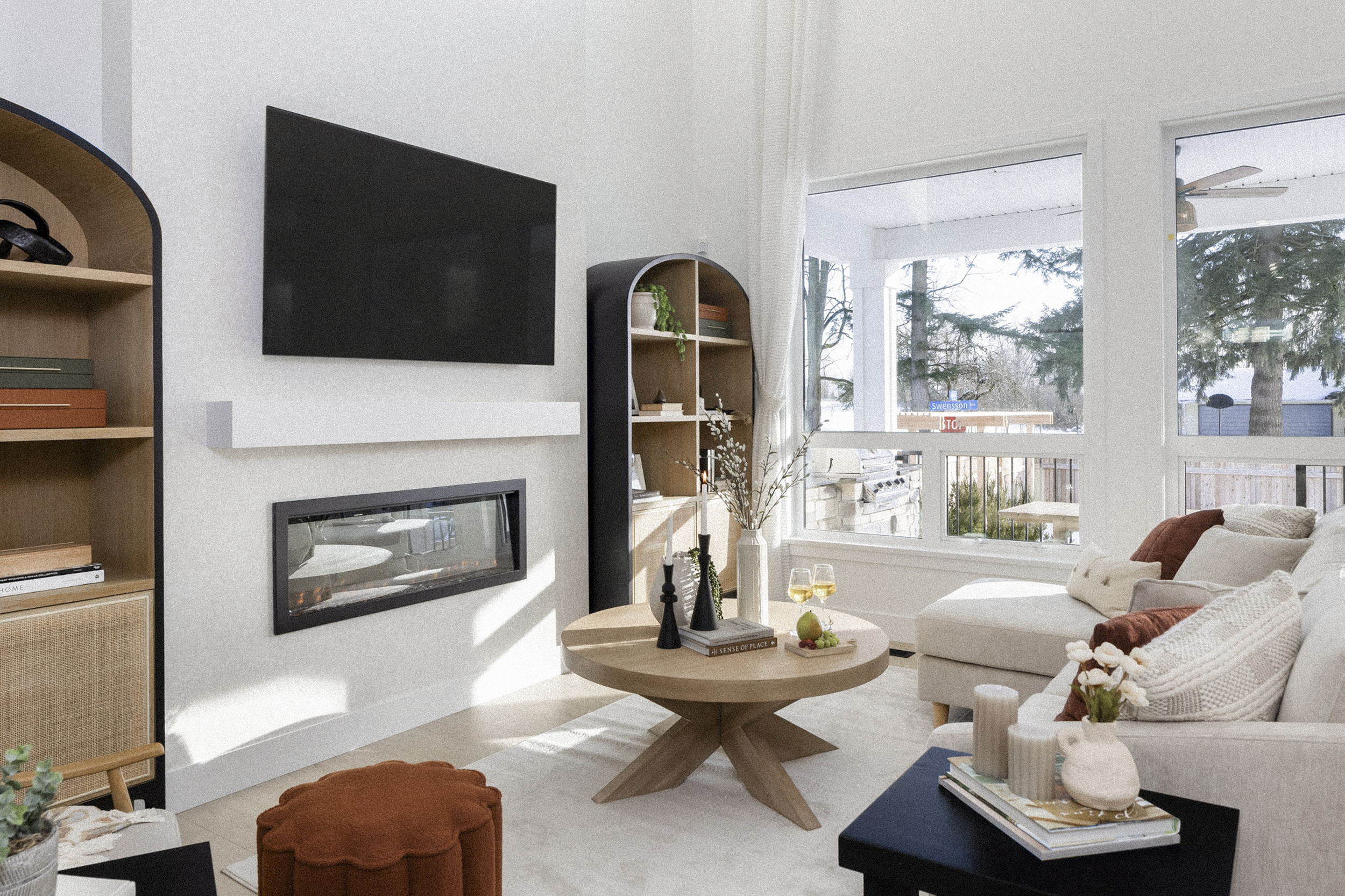
At Amberwood Manor in Abbotsford, the living room pairs a light sectional and generous windows with wood elements and rust-toned accents. It offers a useful reminder that warmth and brightness can belong in the same composition.
Before purchasing, place the proposed finishes together. Review them in the morning, later in the day and with the lights you actually use in the evening. A palette should work in the home you have, not only in the image that inspired it.
Bring the season in naturally
Some of the simplest seasonal changes come from outside the room altogether. A generous branch arrangement can introduce colour, scale and movement without asking the rest of the interior to become “autumn decor.”
We tend to favour one intentional gesture over several smaller seasonal accessories. In a quieter room, a branch with changing leaves may be enough. Against darker wood or richer upholstery, something less expected, such as deep plum or burgundy florals, can bring a more expressive note.
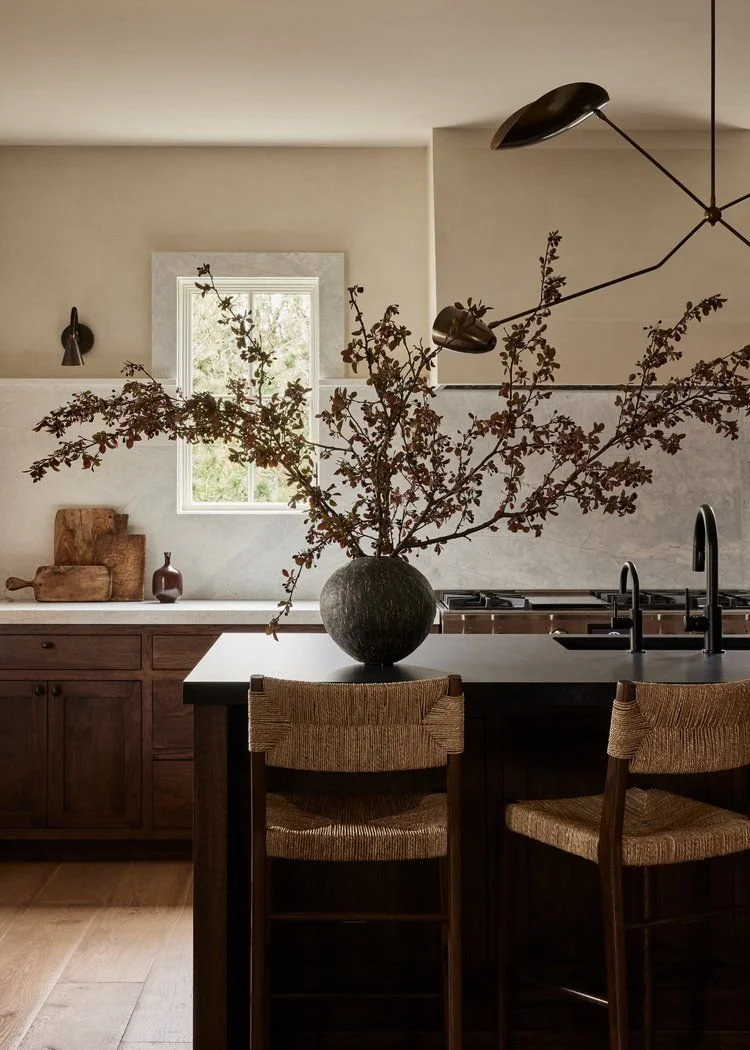
The vessel matters too. A sculptural ceramic, aged metal container or simple dark vase can allow the natural material to become the focal point rather than another decorative layer. Natural elements work particularly well because they are temporary. They allow a room to shift with the season while the architecture, furnishings and materials remain the foundation.
Let the room’s architecture do some of the work
A room does not need a large quantity of seasonal accessories when its underlying elements already have character.
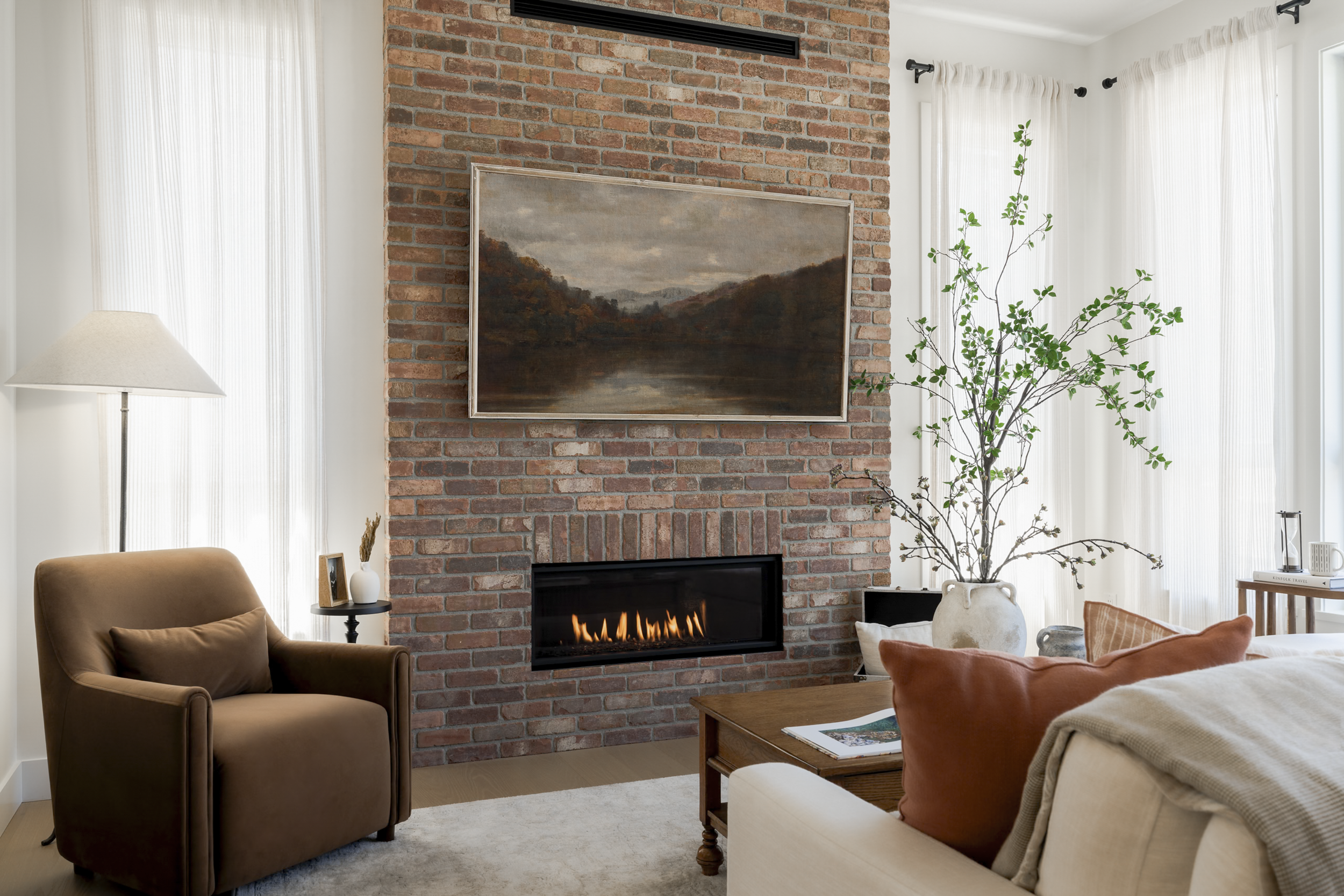
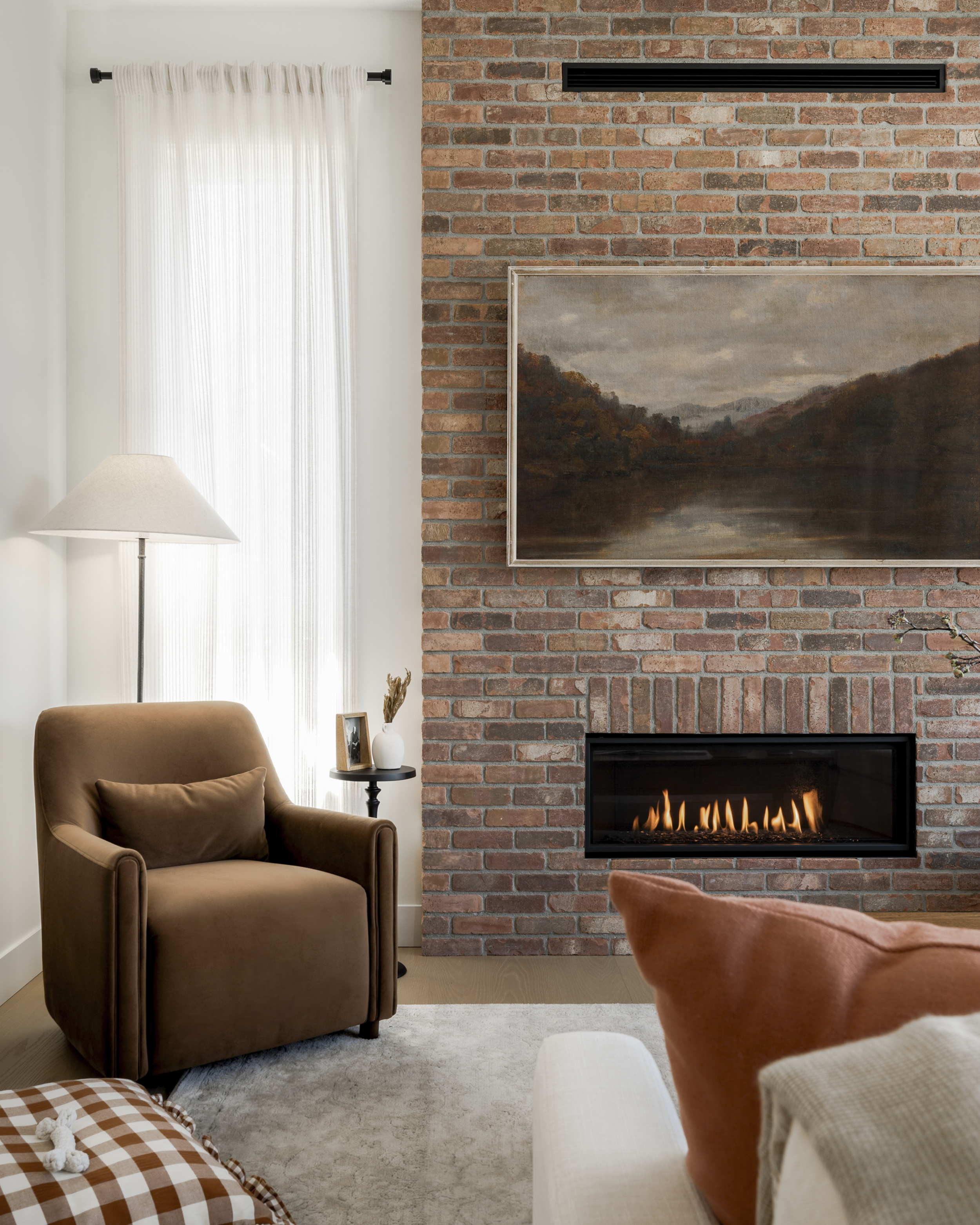
At The Whitmore, a Foxridge Homes showhome in Langley, heritage brick, architectural detailing and tailored furnishings establish a sense of warmth before any seasonal styling is added. In the living room, the brick fireplace, brown armchair, cream upholstery and rust accents create a balance that feels particularly appropriate for the season without being limited to it.
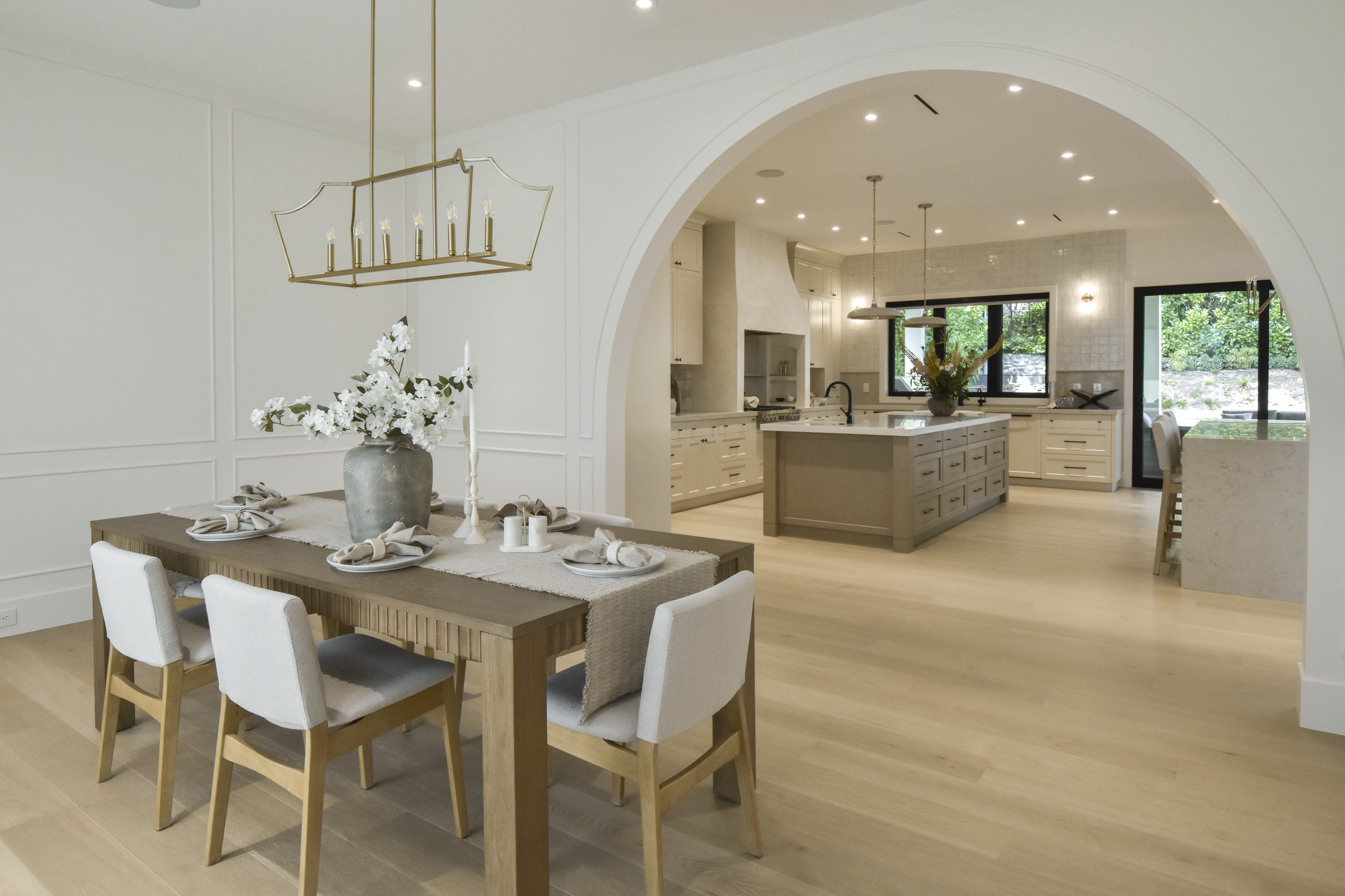
At Le Monarque, a custom home in Burnaby developed with KFA Homes, the design brings together arches, custom millwork, natural stone and warm wood. Those elements give the home depth through its architecture and material relationships rather than through decoration alone.
This is one reason architectural detail becomes so noticeable this season. When the focus moves indoors, fireplaces, millwork, mouldings, stone and wood grain become part of the atmosphere of the room rather than simply its backdrop. The lesson is not that every home needs more architectural detail.
It is to notice what already deserves emphasis. Give an existing fireplace space to register. Avoid filling every shelf. Consider whether the furniture supports the proportions of the room or competes with them. When something feels unfinished, the missing element may be scale, balance or continuity rather than another object.
In the living room, consider fit before fabric
A living room should be appealing from the doorway and comfortable from the sofa. Before selecting new cushions or a different coffee table, sit in the places you use most. Can you comfortably read? Is there somewhere to put a drink? Does the conversation area feel connected, or are the seats arranged around the room’s edges? Can someone pass through without interrupting everyone else? We would resolve those questions before choosing the decorative layer.
Autumn is often when these shortcomings become more noticeable. The room that worked when everyone was outside or moving between spaces in summer suddenly needs to support longer evenings, reading, conversation and entertaining. Try looking at the room as a few related decisions: the main seating arrangement, the rug beneath it, the tables that serve it and the lighting around it. Assess proposed purchases together rather than allowing each one to become a separate decision.
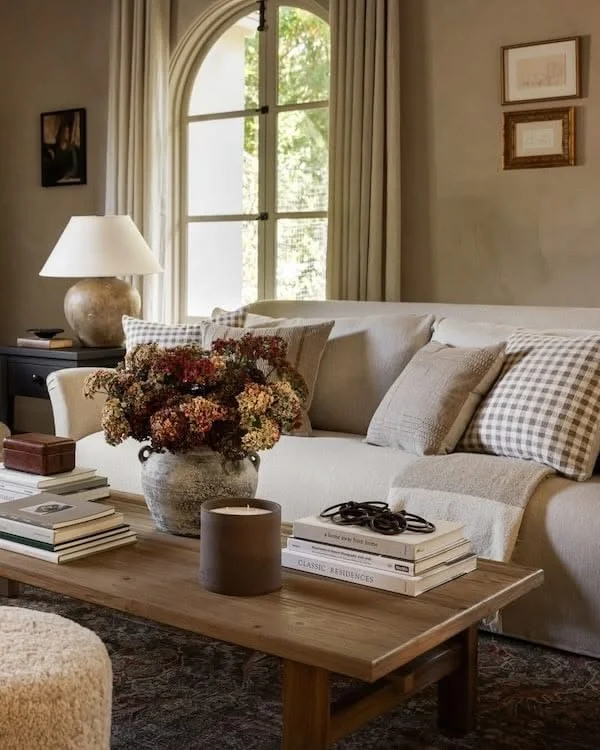
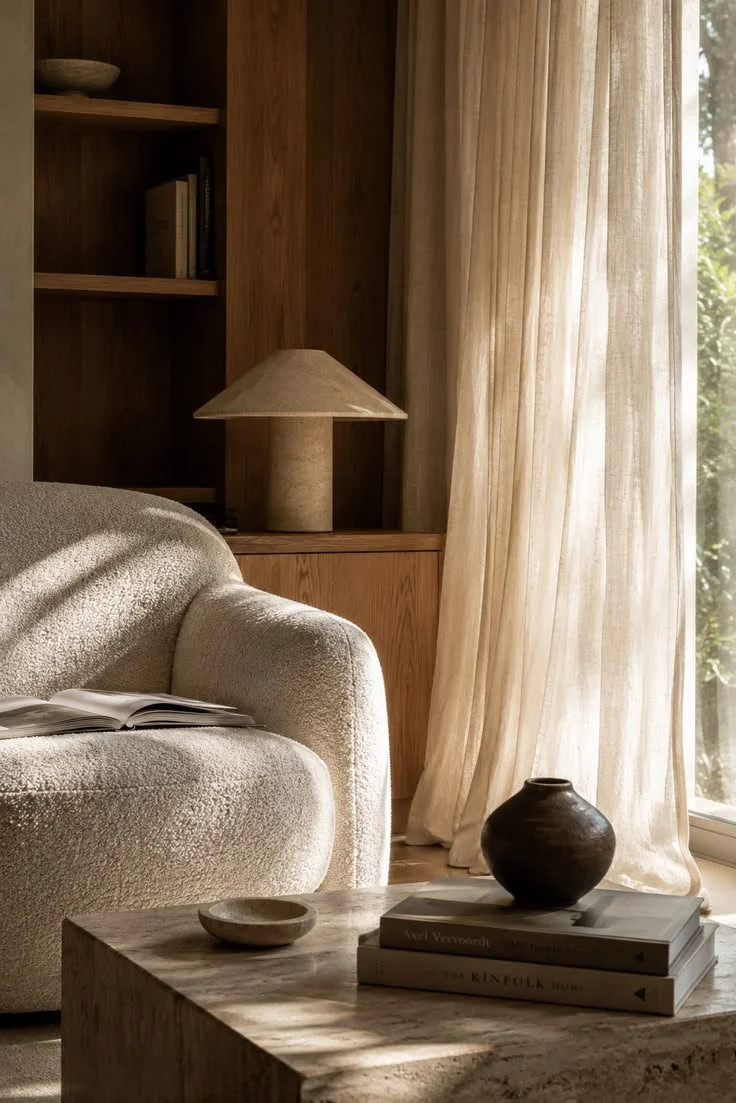
Texture comes next. For a richer autumn composition, consider a smooth upholstery fabric beside a more pronounced weave, a soft cushion against leather, or a patterned textile against a quieter background. There is no need for every surface to make the same kind of statement.
Window treatments can shift the room just as much as upholstery. Linen, wool blends or subtly patterned drapery can soften the architecture and filter lower autumn light, bringing warmth without another layer of accessories.
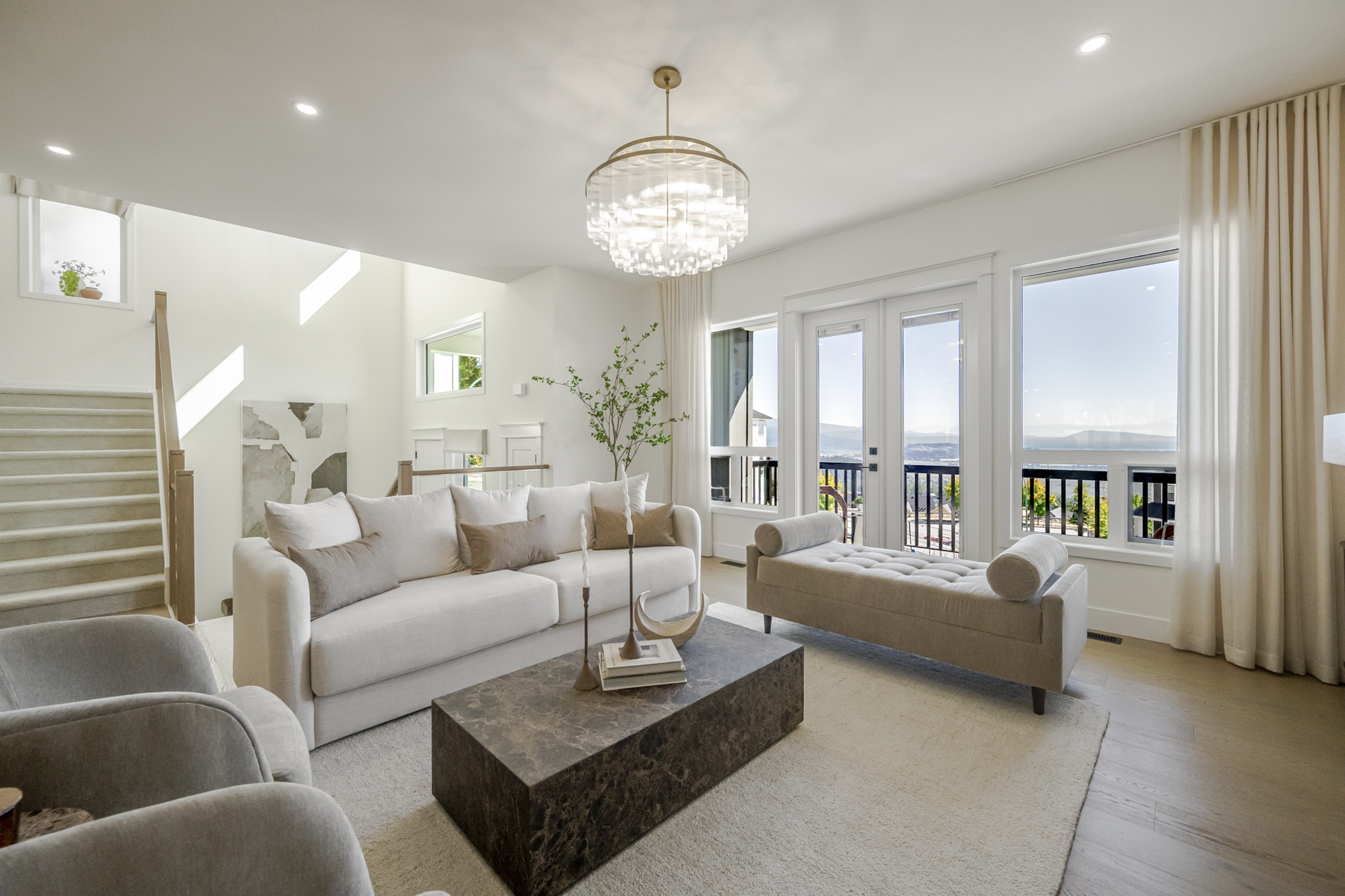
Above: A first look at The Vault, one of our newest projects. A beautiful fabric also needs to suit its application. Consider cleaning, maintenance, light exposure and the demands of the household. Abrasion ratings alone do not tell the full story of how a textile will perform; suitability matters just as much as specification.
For frequently used seating, the better question is not simply, “Is velvet appropriate?” but “Is this particular fabric right for this chair, this room and the people who will use it?” That balance between beauty and everyday use has been central to The Vault, where rich upholstery, layered textures and deeper tones play an important role. Full photography coming soon.
Design the evening, not just the photograph
A room can look beautiful in daylight and feel entirely different once the overhead lights are on. Autumn makes that shift especially obvious. As daylight disappears earlier, evening lighting becomes part of the design rather than something considered only after the furniture is in place.
At The Rowe, built in West Vancouver with KFA Homes, layered lighting plays an important role in shaping the kitchen after dark. Pendant lighting, integrated shelf lighting and recessed fixtures each serve a different purpose, allowing the room to move from task-focused to softer and more atmospheric as the evening unfolds.
The most successful lighting plans work in layers, combining ambient light with focused task lighting and quieter accents. Rather than relying on one source to do everything, each layer supports how the room is actually used.
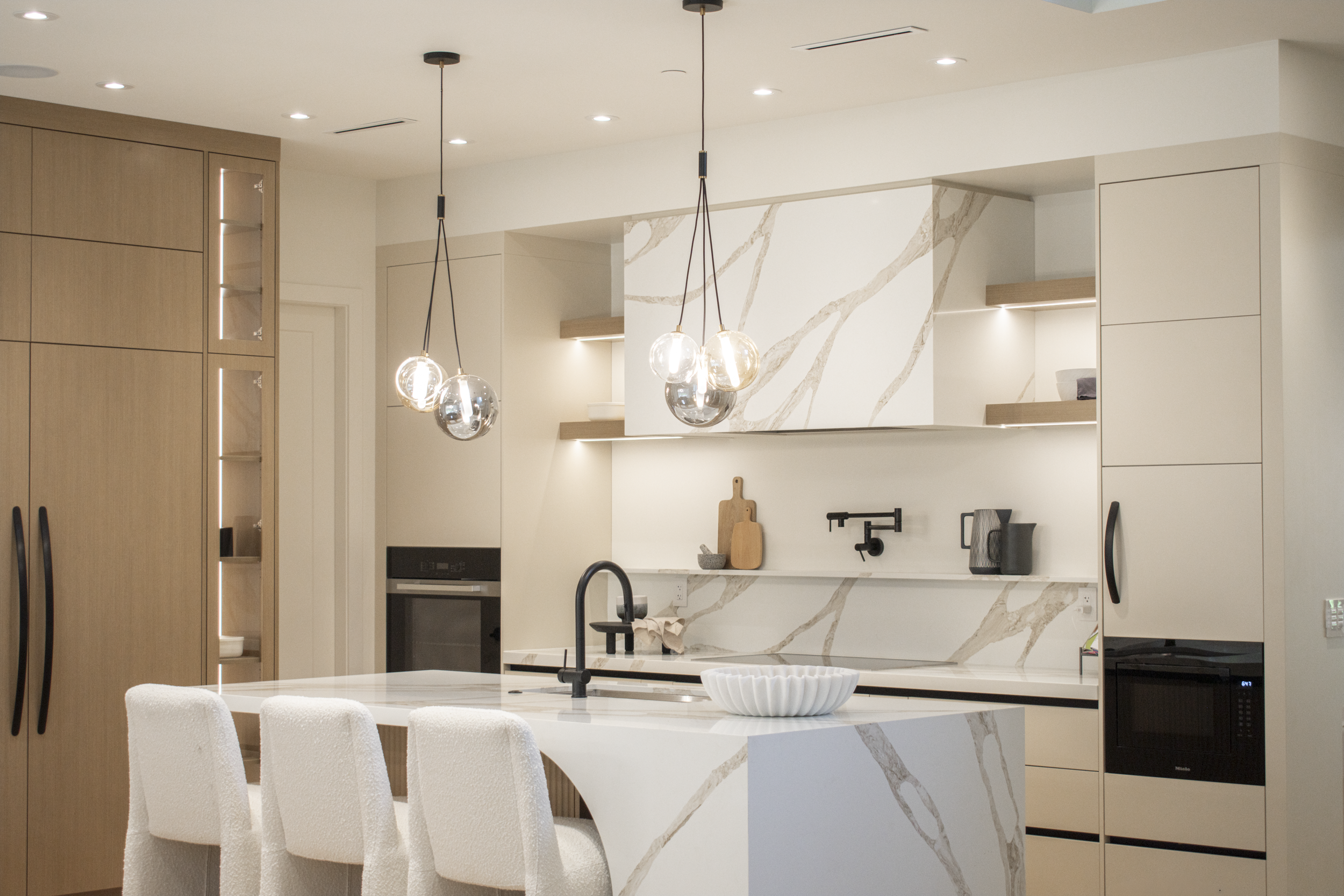
For an evening at home, consider what each area actually needs. A reading chair requires usable light, a dining table should feel connected to the people around it, and circulation routes still need to be comfortably illuminated. Artwork or shelving may benefit from a separate accent, but not every feature needs to compete for attention.
Atmosphere is not the same as darkness. Rather than relying on the “big light,” build smaller pools of illumination through table lamps, floor lamps, sconces and candlelight. The effect is softer, more flexible and particularly suited to longer autumn evenings. Also consider how each light source feels from a seated position; a lamp that looks right on a console may create glare from the sofa.
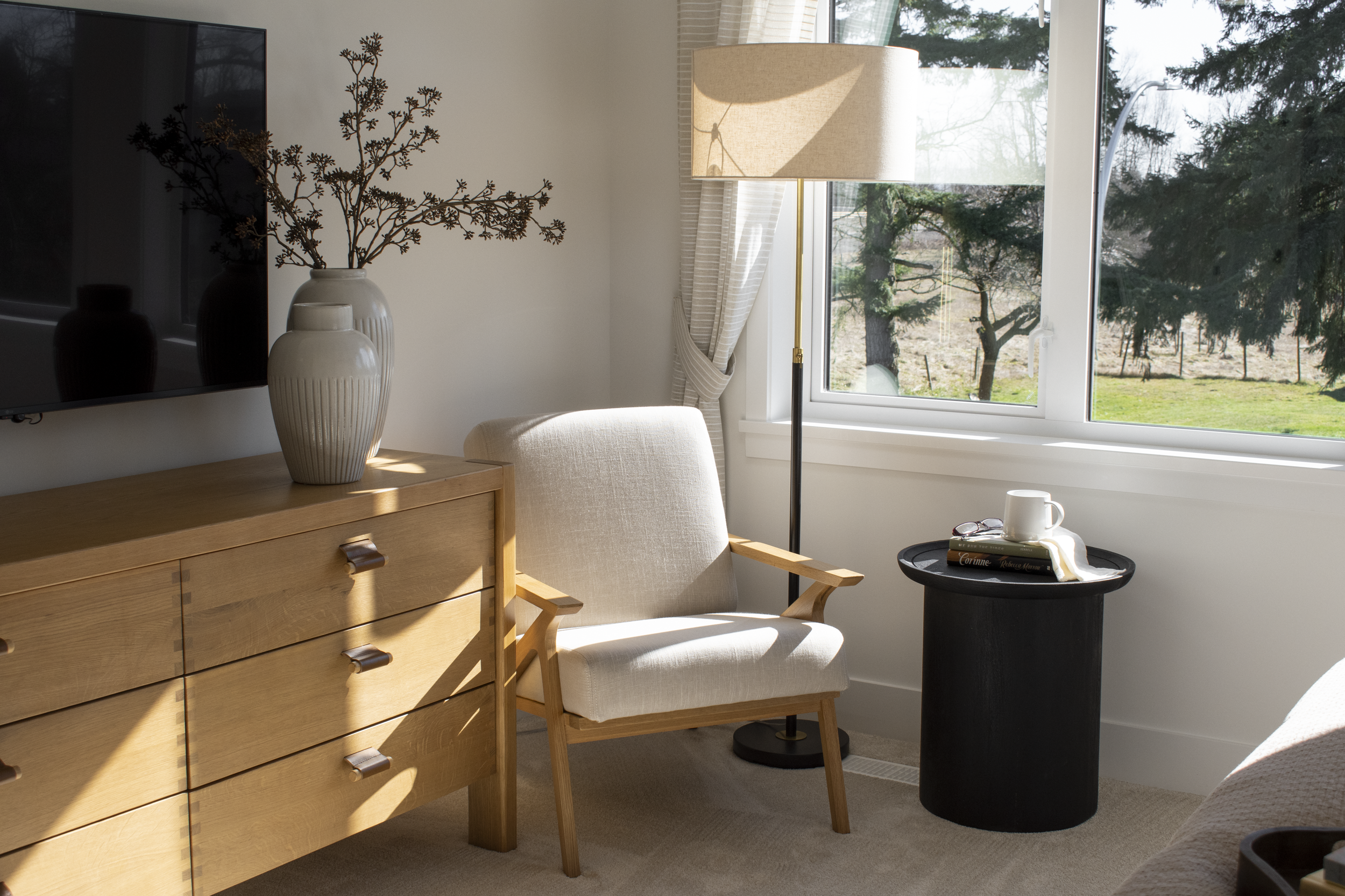
Before adding more decor, spend an evening adjusting the lighting you already have. Notice what feels comfortable, what creates glare and where another source would genuinely help. That exercise can often reveal more than adding another decorative layer.
Design for gathering, not just the table
Autumn entertaining is often presented as a tablescape. We would start a little earlier, with how people arrive, where they gather and how the kitchen and dining area work together. The season tends to bring entertaining back indoors, which makes circulation, seating and the relationship between kitchen and dining spaces more noticeable.
Where will coats go? Where can someone set down a bag or a serving dish? Can the host move between the kitchen and table while guests are seated? Does a beautiful centrepiece leave enough room for the meal? These are useful design questions whether you are hosting two people or a full table.
At The Ellery, one of four KFA Homes residences in Burnaby, the kitchen, dining and living spaces were designed to read as one continuous composition. Warm oak, soft upholstery, creamy cabinetry and restrained metal finishes carry across the open plan, allowing each space to feel distinct while remaining visually connected.
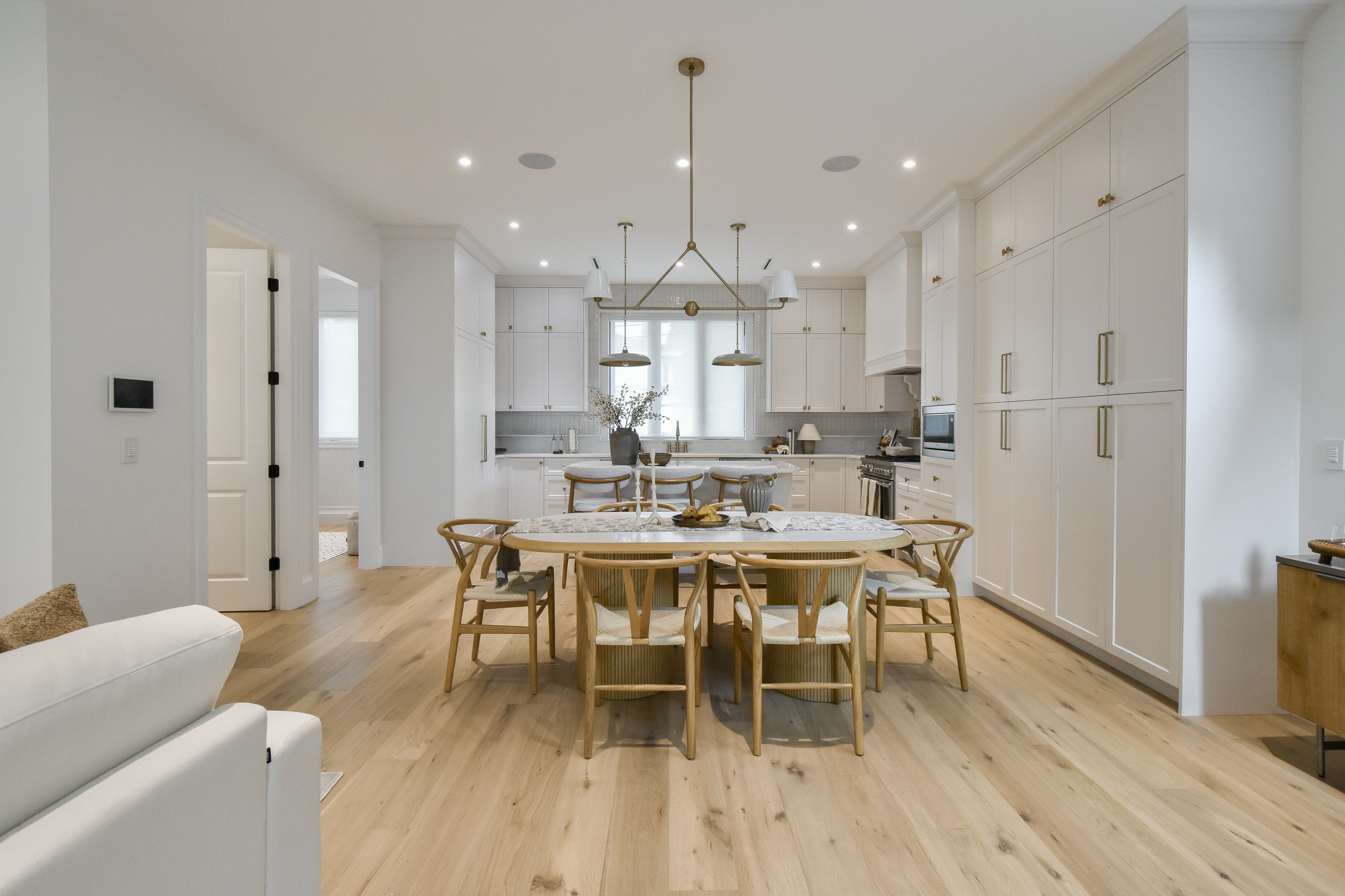
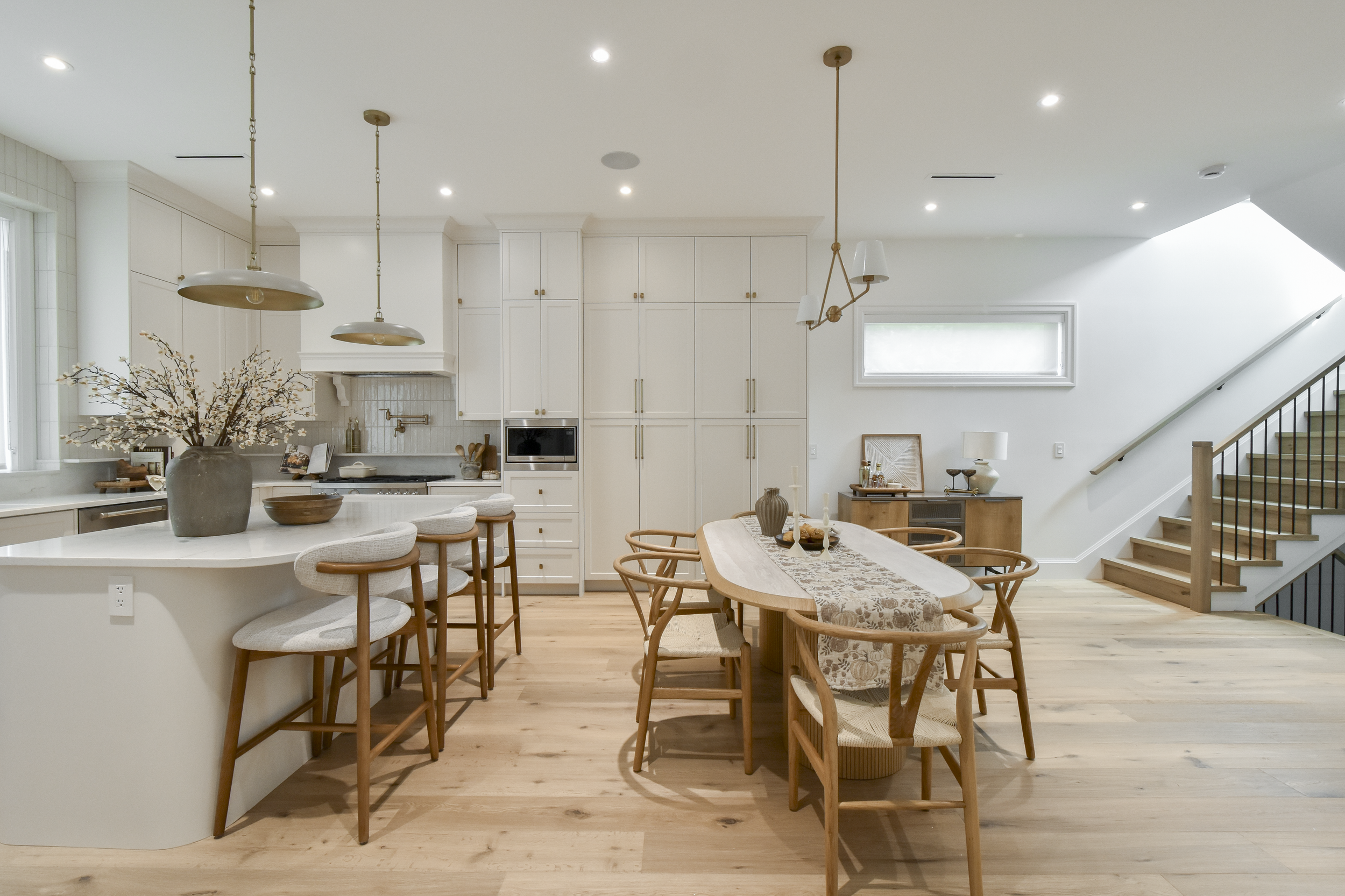
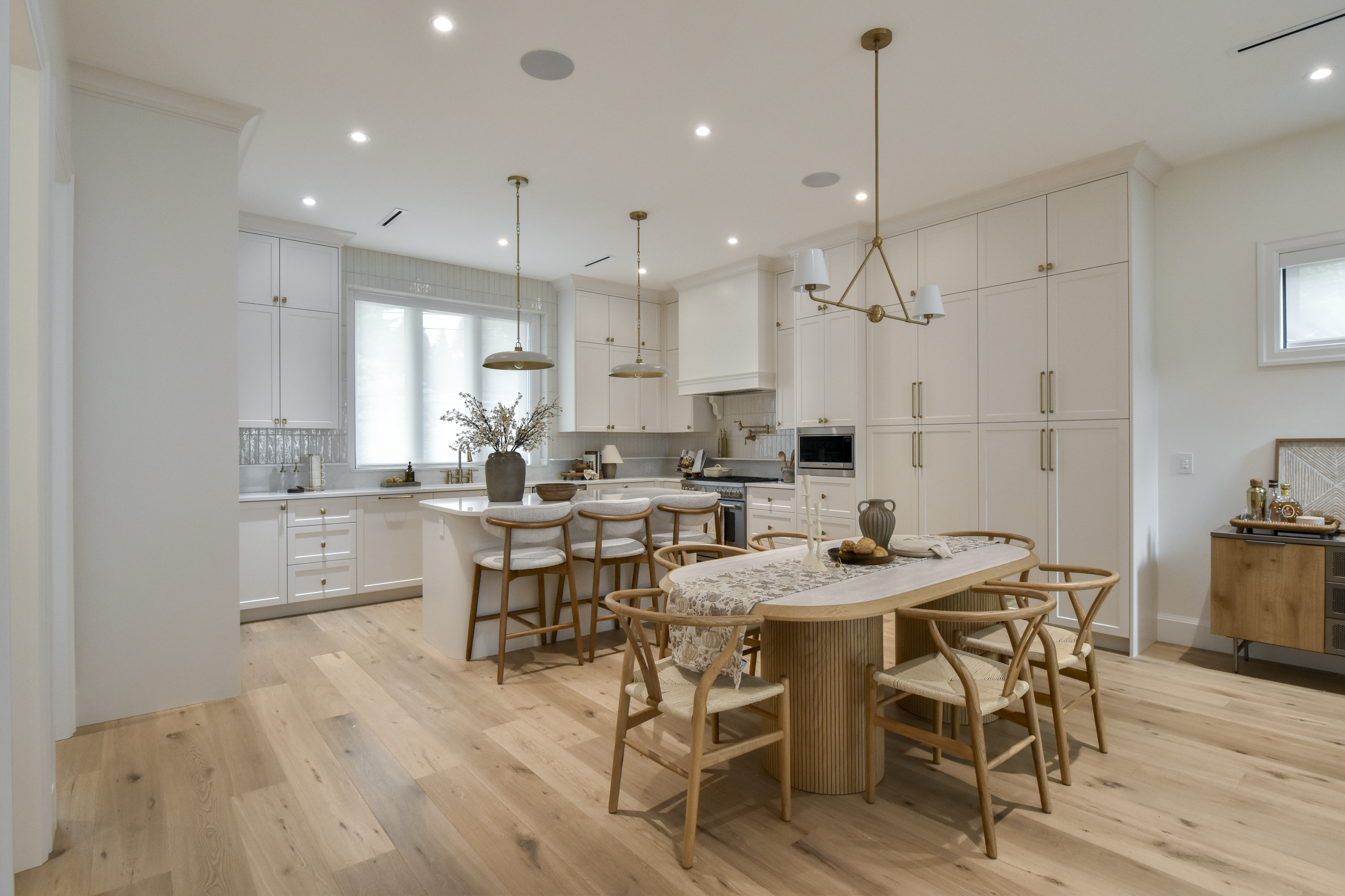
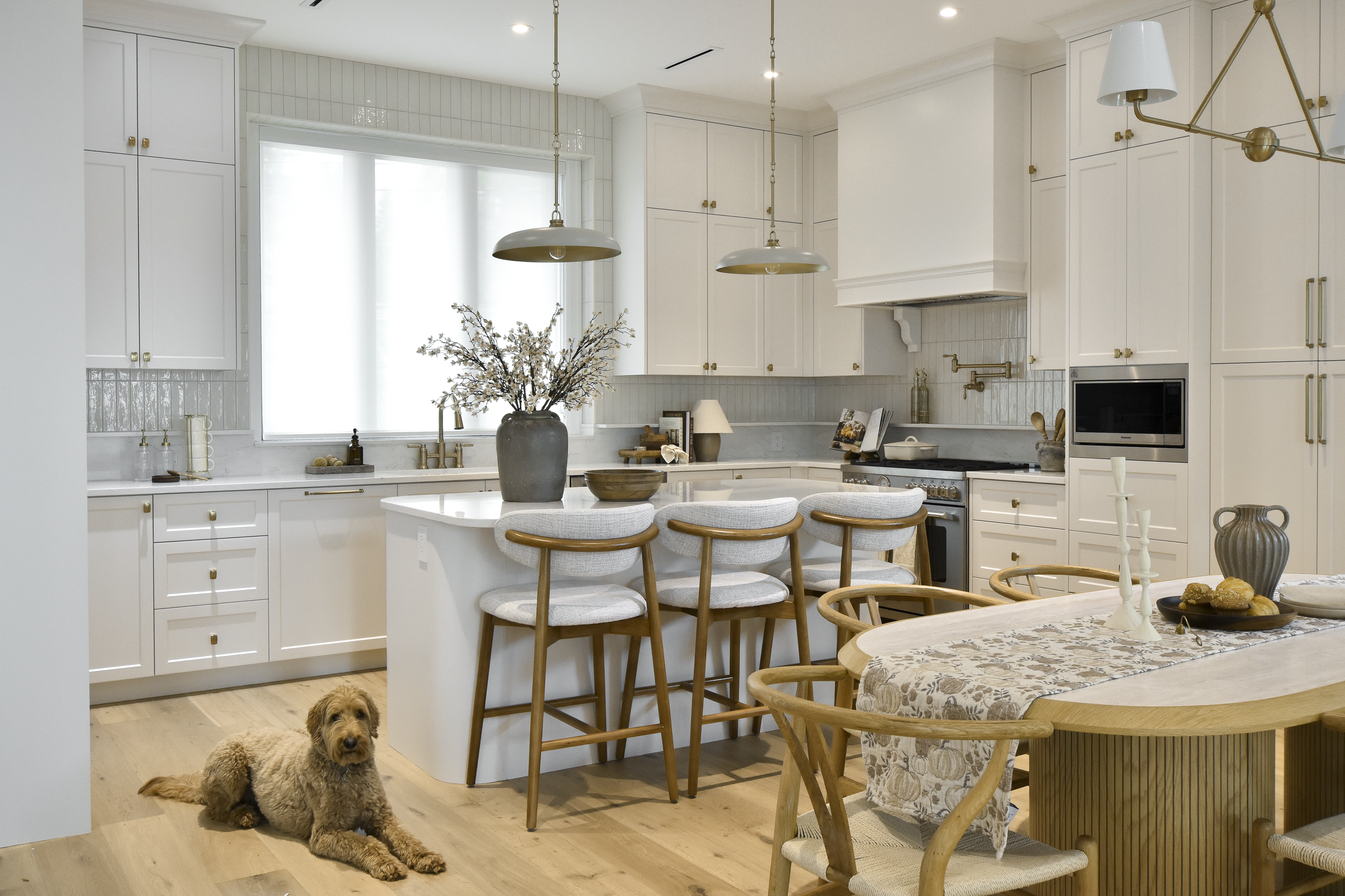
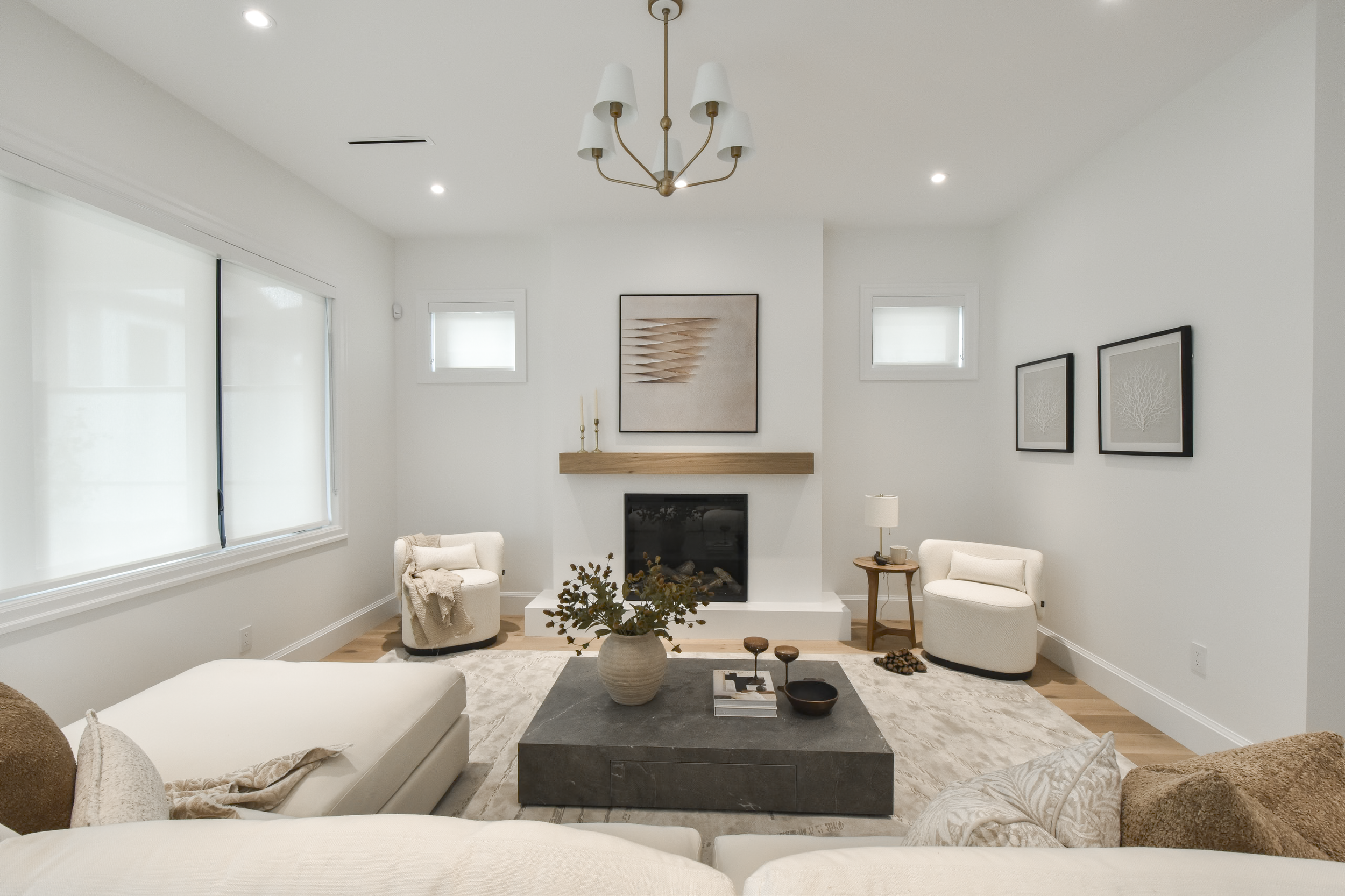
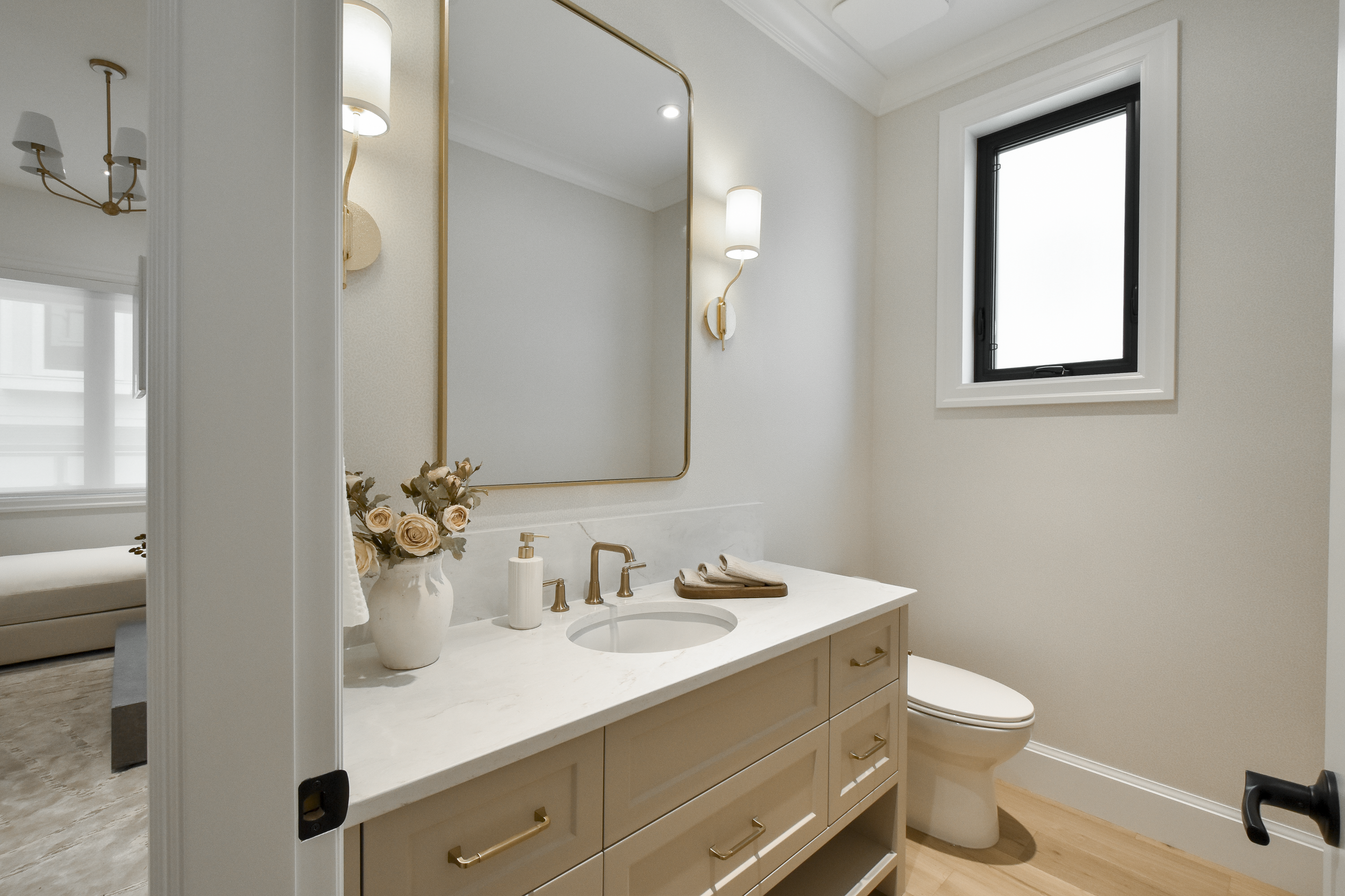
For an existing home, look for one or two elements that can travel between those spaces. A tone from the living room might reappear in dining upholstery. A recurring wood finish or textile could provide continuity without making everything match.
Then keep the table relatively simple: a textile with some substance, ceramics you enjoy using and an arrangement that allows people to see one another. Seasonal branches, candlelight and pieces you already own can be enough. The table does not need to become a display at the expense of actually using it.
When the difficulty is recurring clutter, insufficient storage or an awkward working layout, styling has reached its limit. That is the point to consider a more complete plan rather than continuing to buy objects around the problem.
Let bedrooms and bathrooms feel finished, not themed
A bedroom does not need to become a different room each season. Start with the elements that shape daily use: bedside surfaces, accessible lighting, window treatments, storage and the balance between the bed and the remaining floor space. The seasonal layer can then stay subtle.
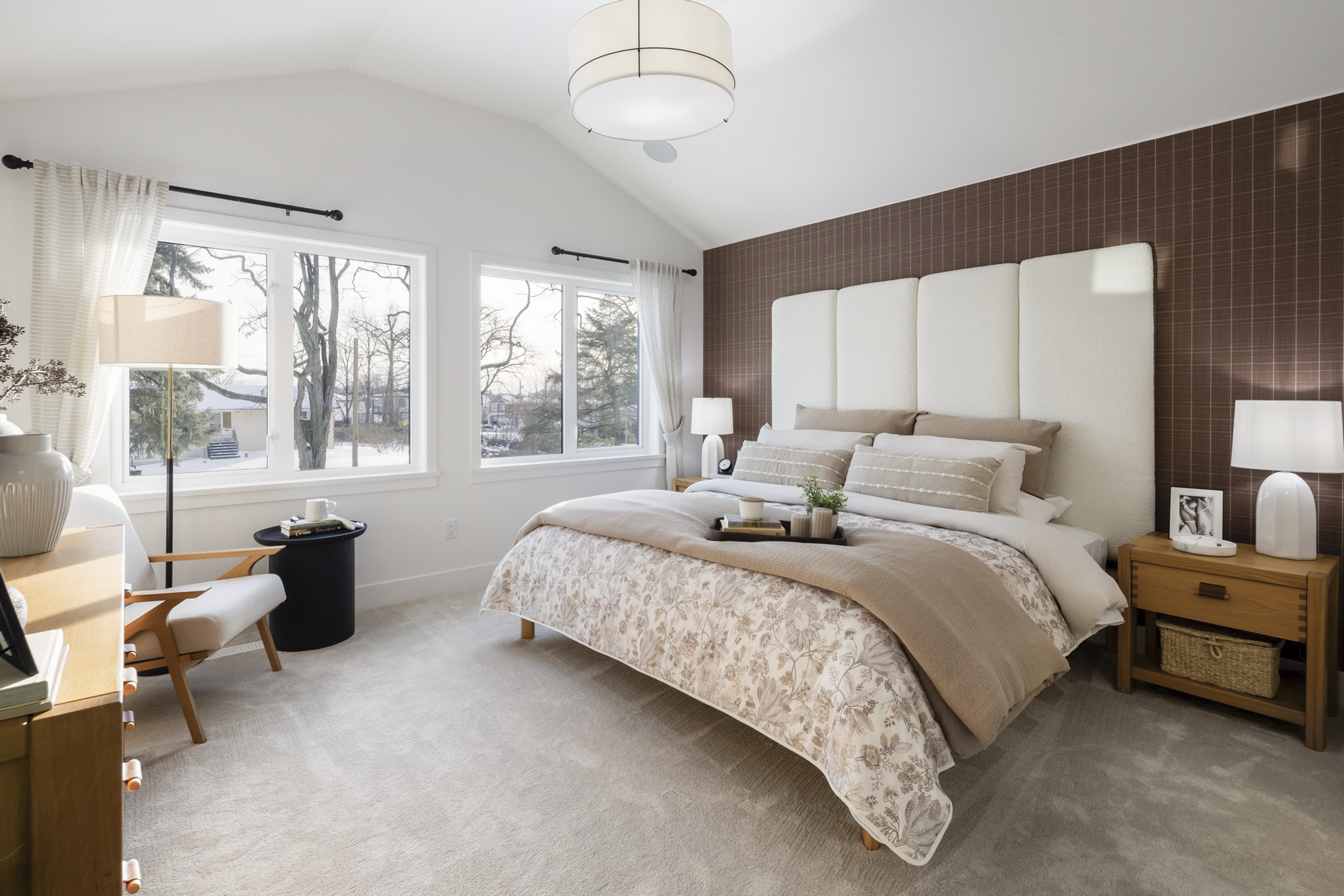
In fall, changing weight and texture is often more effective than changing colour. A deeper coverlet, heavier throw, soft wool, brushed cotton or velvet accent can make the room feel noticeably more inviting while leaving the overall palette intact. Even a different lampshade can shift the evening atmosphere more than another decorative accessory. Consider the room both styled and as it is actually used. A chair that becomes permanent storage may signal the need for a better place to put things, not a more photogenic chair.
In a bathroom, focus first on the relationship between lighting, mirror, vanity and material In a bathroom, focus first on the relationship between lighting, mirror, vanity and material finishes.
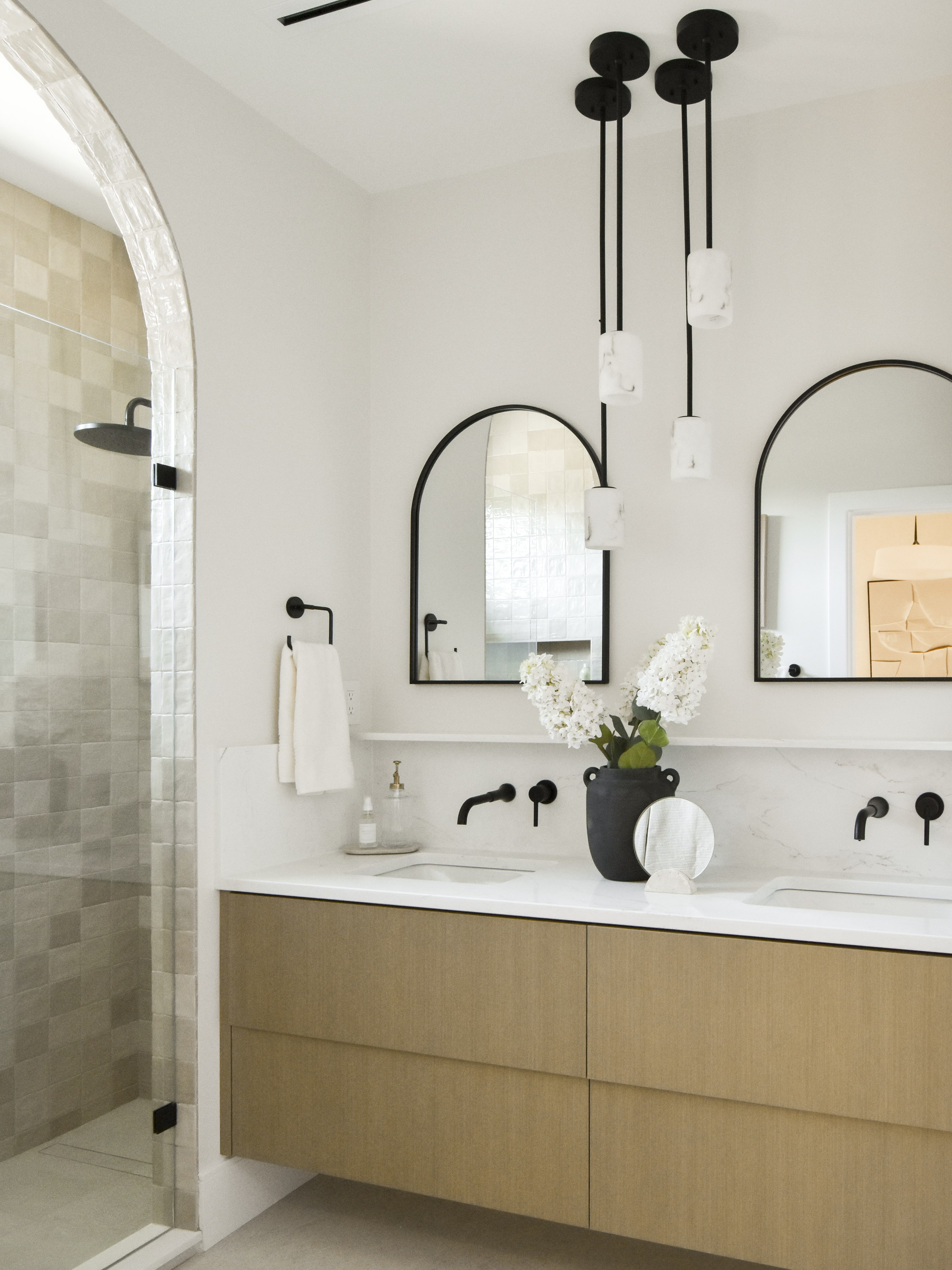
The Hawthorne’s primary ensuite brings together curved forms, custom millwork and carefully composed plumbing and stone details. It is a useful example of a room’s character being established through coordinated design decisions.
For a modest refresh, consider towels, practical storage and the objects left visible. A warmer textile, a small branch or a candle can shift the atmosphere without turning the bathroom into a seasonal vignette. For a renovation, evaluate the whole composition before committing to individual fixtures. Replacing a perfectly functional bathroom finish simply because another colour is having a moment would not be our starting point.
Know what to refresh, what to retain and what to plan
The most useful seasonal update begins with a clear diagnosis. Refresh the atmosphere when the room already works. Reconsider the lighting, edit accessories, move art or introduce a small amount of colour and texture. Start with what you own before making a shopping list.
For fall, this may be as simple as changing one textile, bringing in fresh branches, adjusting the lighting or editing the objects already on display. Plan the furnishings when the room feels unresolved. A sofa, rug, drapery and lighting may each be attractive individually but still fail to work together. Rather than replacing them one at a time without a shared direction, establish the layout and overall composition first.
Purchasing can then be phased within that plan. Consider a renovation when the problem is built into the space. Persistent circulation issues, inadequate storage or a kitchen that does not support everyday routines deserve a different conversation from seasonal styling. The brief should describe what needs to improve, not only what the finished room should resemble. There is also a fourth consideration: what should stay?

At The Beaumont, the design language is established through the relationship between line, form and material. In this entry, the graphic marble floor is framed by warm wood inlay, creating a strong architectural grid that feels both classic and tailored. That structure is softened by the curve of the upholstered bench, the sweep of the staircase and the subtle arching detail in the millwork, allowing the space to feel refined without becoming rigid.
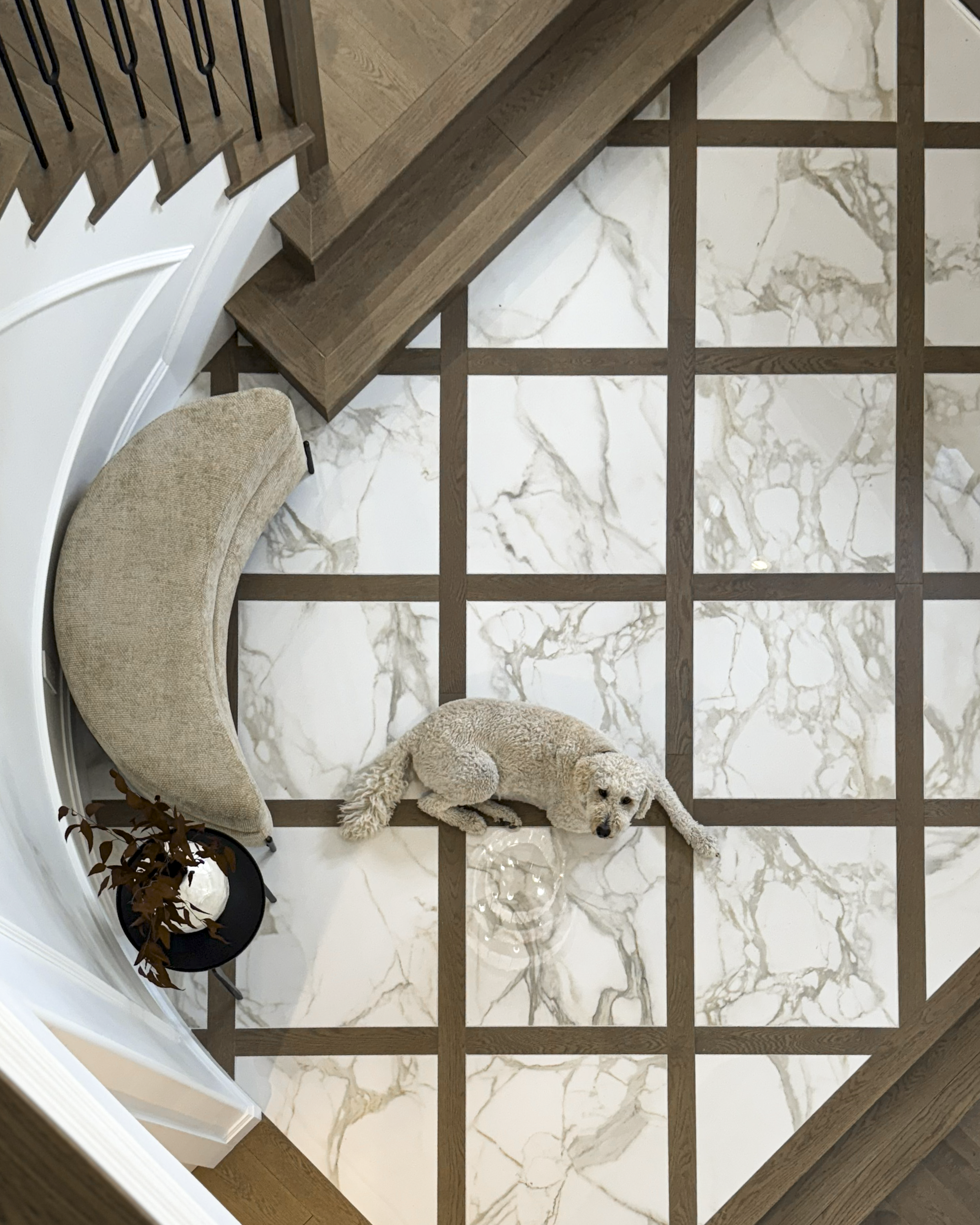
More broadly, it is often the repetition of a few clear ideas that gives a home its identity. A curved silhouette, a favourite material pairing or a balance between warmth and contrast can be more meaningful than filling a space with new pieces. A cohesive interior rarely comes from everything matching. It comes from decisions that relate to one another through shape, tone and material.
That is particularly important when thinking seasonally. The strongest fall interiors still look like the people who live there. The season should add another layer, not replace the identity of the home.
A final layer: No. 94
Once the room feels right, the finishing details can remain simple. Our No. 94 candles offer another way to bring the season home. Hand-poured in Vancouver with 100% soy wax and cotton wicks, the collection was created as an extension of the atmosphere we consider in our interiors. Scent can be one of the smallest seasonal changes and one of the most immediate. It changes the experience of a room without changing anything visually.

This season, Beacon Hill is our edit: a fragrance with notes of santal, iris, cardamom and leather. Warm, slightly smoky and layered, it suits the same kind of rooms we find ourselves drawn to this time of year: deeper woods, tactile textiles, lower light and an evening that slows down a little earlier.
We would pair it with an evening at home, a favourite chair and a room that needs very little else. Explore the collection online, with complimentary pickup available from our Coquitlam studio once your order is confirmed.
A home that feels like yours, in every season
The most compelling thing about a well-dressed home is not that it reflects every current idea. It is that the choices feel connected to the people who live there. Fall can be a reason to look again: at what you enjoy, what you reach for and what has never quite worked.
It can also be a reminder that seasonal living does not require seasonal consumption. Sometimes the right change is a branch from the garden, a lamp switched on earlier, a favourite textile brought back into rotation or simply removing what no longer contributes to the room. Some changes will be small. Others may become the beginning of a more substantial project.
That idea is also at the heart of The Vault, one of our newest projects, where richer tones, sculptural forms and layered natural materials create a home with depth and warmth. Photography coming soon.
At First Impression Designs, our Coquitlam-based studio works across Metro Vancouver on new homes, renovations, furnishings and the finishing layers that bring a space together. Our services span early planning, drawings, material and fixture selections, construction coordination, furniture and styling.
Considering a renovation or a more complete furnishing plan? Tell us about your home, its location and what you would like to change at info@firstimpressiondesigns.com.
The art of inspired living.
